

Ultrasonic Flow Meters Explained: Non-Invasive Measurement for Water & Industrial Use
An ultrasonic flow meter measures fluid flow using sound waves — with no moving parts and, in clamp-on configurations, without any contact with the fluid itself. By transmitting ultrasonic pulses through the pipe and the fluid inside, the meter calculates flow velocity based on how the fluid affects those sound waves.
For industrial facilities, water authorities, and engineering teams managing process or utility water systems, ultrasonic flow meters offer a compelling solution where avoiding pipe penetration, minimising maintenance, or measuring flows in existing pipework without shutdown is a priority.
How Does an Ultrasonic Flow Meter Work?
There are two main measurement principles used in ultrasonic flow meters:


Transit-Time (Time-of-Flight) Ultrasonic Flow Meters
Transit-time meters use two transducers — one positioned upstream and one downstream — to send and receive ultrasonic pulses alternately with and against the direction of flow. Because sound travels faster when moving with the flow than against it, the difference in transit times between the two directions is directly proportional to the average fluid velocity. Transit-time meters are the most common type for clean liquid applications and are highly accurate under the right conditions.
Doppler Ultrasonic Flow Meters
Doppler meters transmit a continuous ultrasonic signal into the fluid and measure the frequency shift caused by reflections from suspended particles, bubbles, or other discontinuities in the fluid. The frequency shift is proportional to the fluid velocity. Doppler meters are suited to liquids containing entrained solids or gas bubbles where transit-time meters would struggle to maintain a clean signal path.
Clamp-On vs Inline Ultrasonic Flow Meters
One of the most important choices in ultrasonic flow measurement is between clamp-on and inline designs:
Clamp-On Ultrasonic Flow Meters
Clamp-on meters attach directly to the outside of the pipe. The transducers transmit ultrasonic signals through the pipe wall into the fluid without penetrating the pipe. There is no need to cut into the pipe, isolate the process, or shut down the system. This makes clamp-on meters ideal for retrofitting to existing pipework, temporary measurement during commissioning or troubleshooting, and monitoring flows in systems that cannot be taken offline.
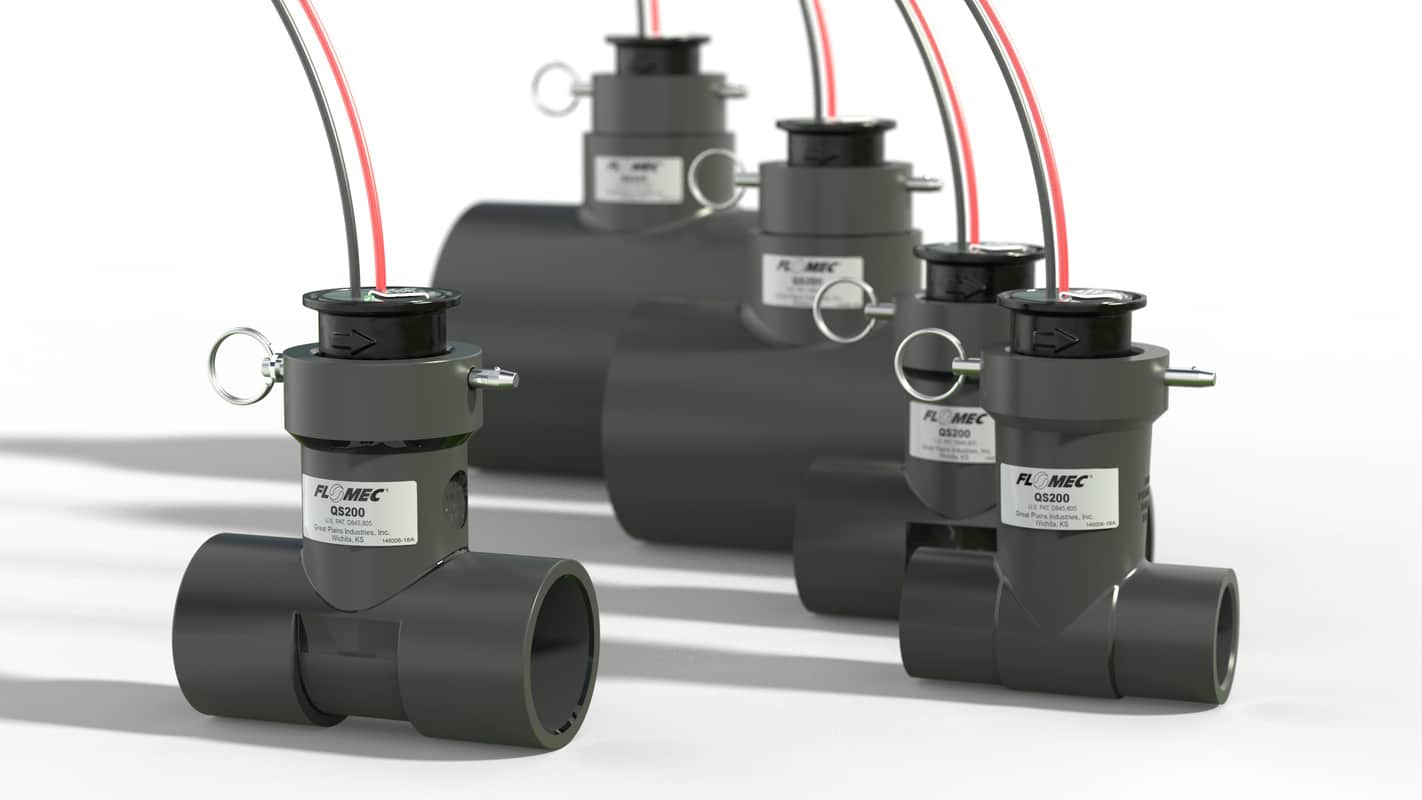
Inline Ultrasonic Flow Meters
Inline meters are installed as a spool piece — a section of the pipeline is replaced with the meter body, which houses the transducers in direct or indirect contact with the fluid. Inline meters typically offer higher accuracy than clamp-on configurations and are the preferred choice for permanent installations requiring certified measurement accuracy.
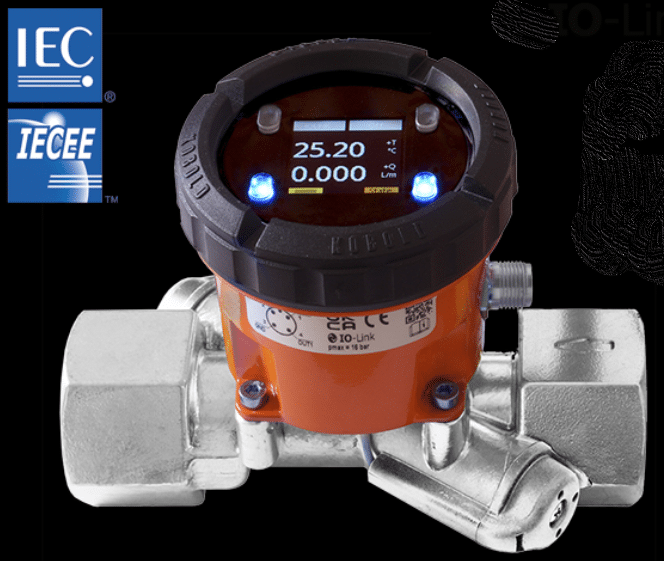
See Link below for DUK Information Video
Key Advantages of Ultrasonic Flow Meters
- No moving parts: No rotor, no bearings, no mechanical wear — resulting in long service life and minimal maintenance requirements
- Non-intrusive measurement: Clamp-on models require no pipe cutting, no process isolation, and no system downtime for installation
- Bidirectional measurement: Can measure flow in both directions simultaneously — valuable in systems where reverse flow is possible
- Wide turndown ratio: Effective across a broad range of flow velocities, with turndown ratios often exceeding 100:1
- Suited to large pipe sizes: Particularly cost-effective for large-diameter pipework where mechanical meters become impractical or cost-prohibitive
- Zero additional pressure drop: No obstruction is introduced into the flow path, meaning no pressure loss and no added pump energy requirement
Applications
Ultrasonic flow meters are used across a broad range of industries and infrastructure applications:
- Water treatment and distribution: Monitoring treated water flows in municipal infrastructure and industrial utilities
- Building services: Chilled water, heating water, and process utility monitoring in commercial and industrial buildings
- Mining and minerals processing: Water balance measurement, tailings management, and process flow monitoring
- Food and beverage: Hygienic flow measurement without fluid contact using clamp-on configurations
- Industrial process: Cooling water, wash water, and utility flows across a wide range of manufacturing environments
For applications requiring a digital flow meter solution with modern communication outputs, ultrasonic meters are available with 4-20mA, pulse, and digital protocol outputs. When integrated with a flow transmitter, they provide full process monitoring, alarming, and data logging capability.
BES Ultrasonic Flow Meters
BES Flowmeters supplies a range of ultrasonic flow meters suited to water measurement and industrial process applications across Australia. Our range covers both clamp-on and inline configurations, with options spanning small-bore process lines through to large infrastructure pipework.
Whether you require a portable clamp-on unit for temporary measurement and commissioning work, or a permanent inline installation with data communication and integration capability, BES can advise on and supply the right solution for your application. Contact us with your pipe size, fluid type, flow range, and output requirements to discuss your options.
Selecting the Right Ultrasonic Flow Meter
- Fluid type and cleanliness: Transit-time meters require clean liquids with minimal suspended solids. Liquids containing entrained particles, bubbles, or suspended solids are better suited to Doppler measurement.
- Pipe material and wall condition: Clamp-on meters depend on the ultrasonic signal transmitting cleanly through the pipe wall. Heavily corroded, lined, or composite pipe walls can attenuate the signal and reduce accuracy.
- Pipe diameter: Confirm the meter’s stated pipe size range covers your application — both clamp-on and inline options typically span a wide range.
- Installation type: Weigh permanent versus portable installation requirements. Clamp-on meters offer maximum installation flexibility. Inline meters offer higher accuracy for critical measurements.
- Accuracy class: Inline meters generally achieve tighter accuracy specifications. For billing, compliance, or custody transfer, confirm the meter meets the required accuracy class.
- Output and integration: Select the output type compatible with your control system, data logger, or monitoring platform.
Frequently Asked Questions
What is an ultrasonic flow meter?
An ultrasonic flow meter measures fluid velocity using sound waves. By transmitting ultrasonic pulses through the fluid and measuring the time difference between pulses sent with and against the flow direction, the meter calculates the average fluid velocity and volumetric flow rate — with no moving parts and, in clamp-on designs, no contact with the fluid.
What is the difference between a clamp-on and an inline ultrasonic flow meter?
A clamp-on ultrasonic flow meter attaches externally to the pipe with transducers that transmit through the pipe wall — no pipe cutting or process shutdown required. An inline model is installed directly in the pipeline as a spool piece. Clamp-on meters are faster to install and ideal for retrofit or temporary measurement. Inline meters typically offer higher accuracy and are preferred for permanent installations requiring certified measurement accuracy.
Can ultrasonic flow meters measure dirty or particle-laden liquids?
Transit-time ultrasonic meters work best with clean, particle-free liquids. For liquids containing suspended solids, gas bubbles, or entrained particles, Doppler ultrasonic flow meters are the better choice, as they rely on signal reflections from particles in the fluid rather than a clear transmission path.
Do ultrasonic flow meters require regular maintenance?
Because ultrasonic flow meters have no moving parts and — in clamp-on configurations — no contact with the fluid, maintenance requirements are minimal. Clamp-on transducers can be inspected and repositioned without any process disruption. Inline models may require periodic inspection of the transducer ports and meter body, but service intervals are long compared to mechanical metering technologies.
What pipe sizes can ultrasonic flow meters measure?
Ultrasonic flow meters are available for pipe sizes ranging from 15mm to over 3,000mm in diameter, making them one of the most versatile metering technologies available. For small-bore applications, inline models are typically used. For large-diameter infrastructure pipework, clamp-on meters are often more economical and practical than alternative technologies.