
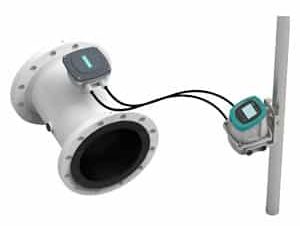
Electromagnetic Flow Meter Installation: Common Mistakes That Affect Accuracy
An electromagnetic flow meter is one of the most accurate ways to measure conductive liquids — but only when it’s installed correctly. A meter that’s perfectly specified on paper can still return unreliable readings if a handful of well-known installation mistakes creep in. Here’s what to check before, during, and after fitting one.
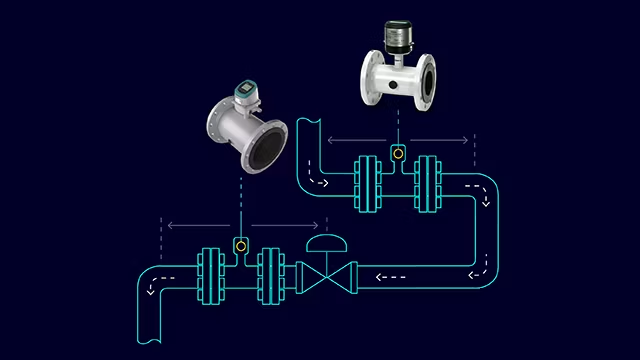
Flexible installation in challenging locations
The Sitrans fully welded sensor is built for direct burial and flooding with IP68 options. Integrated grounding electrodes can eliminate grounding rings. Flowmeter supports 0 x DN upstream and downstream installation in all orientations.
What an Electromagnetic Flow Meter Needs to Work Accurately
An electromagnetic (mag) flow meter works by applying a magnetic field across the pipe and measuring the small voltage induced as conductive fluid passes through it — a principle that depends on the fluid having a minimum level of conductivity, on the pipe running full, and on a clean electrical signal reaching the transmitter. Get any one of those wrong and accuracy suffers, even though the meter itself is functioning correctly.
The Installation Mistakes That Most Often Cause Problems
Poor earthing. This is the single most common cause of unstable mag meter readings. The meter needs a solid reference earth close to the measuring point — usually via earthing rings or bonding straps — particularly on non-metallic pipe like PVC or fibreglass, which won’t provide a natural earth path the way steel pipe does.
Not enough straight pipe run. Installing a meter too close to a valve, pump, elbow, or tee means it’s reading a distorted, turbulent flow profile rather than a stable one. Allowing adequate straight pipe upstream and downstream — more if the site has particularly aggressive fittings nearby — resolves most of these issues before they start.
An empty or partially full pipe. A mag meter needs the pipe running completely full to read correctly; air pockets or a partially drained line will produce false or erratic readings. Vertical installation with upward flow is the most reliable way to guarantee this.
Incorrect electrode orientation. On a horizontal pipe, the electrodes need to sit on the horizontal axis rather than top or bottom, where trapped air or settled solids can interfere with the signal.

BES Flowmeters Electromagnetic Range & Support
BES Flowmeters is an authorised distributor of Siemens electromagnetic flow meters in Australia, and our team can talk you through site-specific installation questions before your meter arrives — not just after. Browse the full electromagnetic flow meter range, or compare it against our wider flow meter range if you’re still deciding on the right technology for your application.
Frequently Asked Questions
Why does earthing matter for an electromagnetic flow meter?
Electromagnetic flow meters rely on detecting a small voltage generated as conductive fluid moves through a magnetic field. Poor or missing earthing lets stray electrical noise swamp that signal, causing unstable or inaccurate readings — correct earthing rings or bonding straps are essential, especially on non-conductive pipe such as PVC.
How much straight pipe run does a mag flow meter need?
As a general rule, allow at least 5 pipe diameters of straight, unobstructed pipe upstream of the meter and 3 diameters downstream. Extra straight length is worth allowing after valves, pumps, bends, or tees, since turbulence there can distort the flow profile the meter is reading.
Can an electromagnetic flow meter be installed vertically?
Yes — vertical installation is often preferred because it naturally keeps the pipe full, which is essential for accuracy. If a horizontal run is unavoidable, the electrodes should be mounted on the horizontal axis, not the top or bottom, to avoid trapped air or settled solids affecting the reading.