
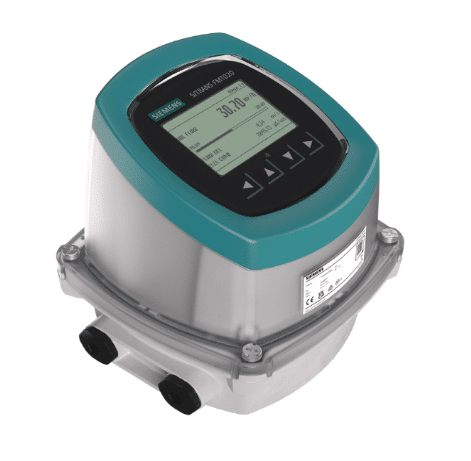
Digital Flow Meters: The Complete 2026 Buyer’s Guide
A digital flow meter goes beyond basic flow measurement, offering data logging, remote monitoring, and connectivity features that give businesses far more visibility over their processes. As Australian industry moves toward automated monitoring and predictive maintenance, digital-enabled meters have become the standard choice for any site that needs more than a simple flow reading. This guide covers what actually makes a meter “digital,” which output protocols matter, and how to choose the right digital flow meter for your application in 2026.


What Makes a Flow Meter “Digital”
Digital flow meters combine a sensing element with onboard electronics capable of processing, storing, and transmitting flow data — typically via digital outputs such as Modbus, HART, or increasingly, wireless and IoT-enabled connections. This is a meaningful step up from a purely mechanical or analogue meter, which only provides a local reading with no easy way to log, transmit, or act on that data automatically. A digital meter turns raw flow measurement into usable information — feeding it into building management systems, SCADA, or cloud-based monitoring platforms where it can trigger alerts, populate dashboards, or support automated control logic.
Digital Output Protocols Explained
Not all “digital” outputs work the same way, and the right protocol depends on what your existing control infrastructure supports:
- 4–20mA with HART — the industry standard for process instrumentation, layering digital diagnostics and configuration data on top of a conventional analogue signal. Common across the Siemens SITRANS F M range.
- Modbus RTU/TCP — a widely supported digital protocol for integrating flow data directly into SCADA and PLC systems without needing a separate analogue-to-digital conversion step.
- Pulse output — a simple digital signal proportional to flow volume, often used where a full communication protocol isn’t required, such as basic totalising or batch counting.
- Wireless/IoT connectivity — increasingly available on newer meter and transmitter combinations, useful for remote or hard-to-wire sites where running cabling isn’t practical.
Key Features to Look For
- Data logging and historical trend storage — lets you review flow patterns over time rather than relying on a single point-in-time reading, which is essential for spotting leaks, drift, or unusual consumption.
- Remote monitoring and alerting — flags abnormal flow conditions automatically, rather than waiting for someone to notice a problem on site.
- Digital communication protocols — confirm the meter supports the specific protocol your existing control system already uses, rather than assuming compatibility.
- Battery life and power options — particularly important for remote installations where mains power isn’t available and a transmitter needs to run reliably for years between servicing.
- Compatibility with existing systems — a digital meter is only as useful as its ability to talk to the platforms you already run; check integration requirements before purchasing.
Digital vs Analogue: Which Does Your Application Need?
Not every application needs a fully digital, connected meter. A simple analogue or mechanical meter can still be the right, cost-effective choice for a single-site, low-monitoring-requirement installation where someone can check the reading manually. Digital becomes the clear choice once you need any of the following: remote or unattended sites, multiple meters feeding into a central monitoring system, historical data for compliance or reporting, or early-warning alerting for leaks and abnormal consumption. If your operation is scaling, adding sites, or moving toward automated monitoring, specifying digital from the outset avoids a costly retrofit later.

See Video Link below on the MIK Meter
https://www.kobold.com/uploads/files/u-pace-GB.mp4
Digital Flow Meters at BES Flowmeters
BES Flowmeters supplies digital-enabled flow meters across the Siemens, Flomec and KOBOLD ranges, suited to applications from single-site monitoring to multi-site industrial networks. The Siemens SITRANS FMS electromagnetic range pairs with the MAG FMT020 transmitter series for HART and Modbus output, while Flomec’s digital-output turbine and positive displacement meters suit fuel, oil and water applications needing pulse or 4–20mA signals. KOBOLD’s instrumentation range covers a broad mix of digital display and communication options across flow, level and pressure measurement. Explore our broader flow meter range or read our guide to flow transmitters to understand how signal output integrates with digital systems.
Frequently Asked Questions
What’s the benefit of a digital flow meter over an analogue one?
Digital flow meters offer data logging, remote monitoring, and easier integration with modern control and IoT systems, giving businesses more visibility and control than analogue-only meters.
Can digital flow meters be monitored remotely?
Yes — most digital flow meters support remote monitoring via wired network connections, cellular, or wireless protocols, depending on the model and configuration.
Are digital flow meters more expensive than standard meters?
Digital and smart-enabled models typically carry a premium over basic analogue meters, but the added visibility and reduced manual monitoring often offset the cost for larger or remote operations.
Which digital output protocol should I choose?
It depends on your existing control system. HART is common where you already run 4–20mA instrumentation, Modbus suits direct SCADA/PLC integration, and pulse output is often sufficient for simple totalising applications. BES can help confirm compatibility before you order.
Can I retrofit digital output onto an existing analogue meter?
In some cases, yes — certain meter bodies can be paired with a digital-output transmitter retrofit. Compatibility depends on the existing meter model, so it’s worth checking with BES before assuming a full replacement is needed.
Need help choosing the right flow meter for your application? Get in touch with the BES Flowmeters team for expert advice and a fast quote.