

What Is an Electromagnetic Flow Meter? Mag Flow Technology Explained
An electromagnetic flow meter — commonly called a mag flow meter — is a flow measurement device that uses Faraday’s Law of Electromagnetic Induction to measure the velocity of electrically conductive liquids passing through a pipe. With no moving parts, no obstruction in the flow path, and exceptional long-term reliability, electromagnetic flow meters are one of the most widely used metering technologies in water, wastewater, food processing, and industrial process applications worldwide.
BES Flowmeters supplies a range of electromagnetic flow meters from Siemens — one of the world’s benchmark manufacturers of mag flow technology — to industrial and commercial buyers across Australia
How Does an Electromagnetic Flow Meter Work?
Electromagnetic flow meters operate on Faraday’s Law, which states that a voltage is induced in a conductor moving through a magnetic field. In a mag flow meter, the conductive liquid is the conductor, and the meter generates a magnetic field across the pipe using coils mounted outside the flow tube.
As the conductive liquid flows through the magnetic field, a small voltage is induced across the fluid, proportional to the fluid velocity. Two electrodes mounted on opposite sides of the flow tube measure this induced voltage. The transmitter then processes the voltage signal and calculates the volumetric flow rate based on the pipe diameter and measured velocity.
The result is a measurement that is:
- Directly proportional to average fluid velocity across the pipe cross-section
- Unaffected by fluid density, viscosity, temperature, or pressure
- Unaffected by flow profile variations, provided adequate upstream straight pipe is maintained
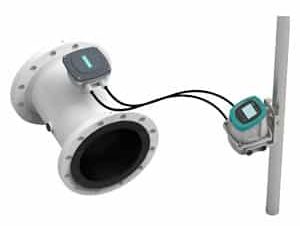
Key Advantages of Electromagnetic Flow Meters
- No moving parts: Nothing to wear, jam, or obstruct — electromagnetic meters have exceptional service life with minimal maintenance
- No pressure drop: The full-bore design introduces no restriction to flow, meaning no additional energy loss through the meter
- High accuracy: Typically ±0.5% of reading — suitable for custody transfer and billing applications
- Bidirectional measurement: Can accurately measure flow in both directions
- Excellent rangeability: Accurate across a very wide range of flow velocities — typically from 0.1 m/s to 10 m/s or beyond
- Liner and electrode material options: Available in a wide range of wetted material combinations to suit corrosive, abrasive, or hygienic fluids
- Empty pipe detection: Most modern electromagnetic meters can detect and alarm when the pipe is not full, preventing false readings
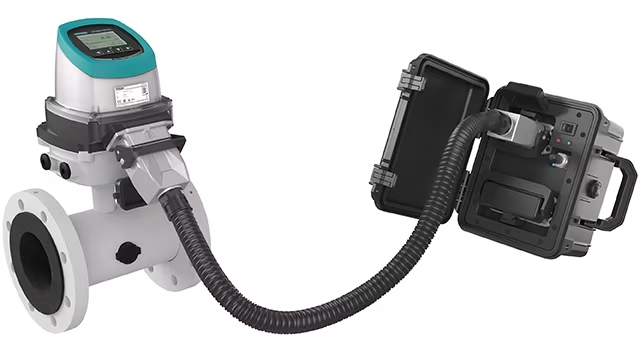
Applications and Suitable Liquids
Electromagnetic flow meters are suitable for any electrically conductive liquid — typically liquids with a conductivity of at least 5 µS/cm. Common applications include:
- Water and wastewater: Municipal water distribution, sewage and effluent measurement, irrigation networks — the most common application for mag flow globally
- Food and beverage processing: Measurement of water, milk, juice, beer, and other conductive food-grade liquids using hygienic liner and electrode materials
- Chemical processing: Acids, alkalis, and aggressive process chemicals — using appropriate liner materials such as PTFE or hard rubber
- Mining and minerals: Slurries and process water in mineral processing facilities
- Pharmaceutical manufacturing: Purified water, process fluids, and cleaning solutions in GMP environments
For water measurement applications, electromagnetic meters pair naturally with BES’s broader range of water flow meters, offering a technology solution for virtually any water measurement challenge.
- Non-conductive liquids: Mag flow meters cannot measure hydrocarbons such as oils, fuels, or solvents — these liquids lack the electrical conductivity required for the measurement principle to work
- Gases: Electromagnetic meters are designed for liquids only and cannot measure gas flows
- Low-conductivity liquids: Deionised water, highly purified water, and some industrial solvents may fall below the minimum conductivity threshold
- Partially filled pipes: Electromagnetic meters require a full pipe to measure accurately — they are not suitable for open-channel or partially filled pipe applications without specialist equipment
For non-conductive liquid measurement, BES recommends considering positive displacement or turbine flow meters. For gas measurement, variable area or ultrasonic technologies are more appropriate.
Siemens Electromagnetic Flow Meters at BES Flowmeters
BES Flowmeters is an authorised Australian distributor for the Siemens SITRANS range of electromagnetic flow meters — one of the world’s most trusted and widely installed mag flow product families.
The Siemens SITRANS FM range includes sensors and transmitters designed for water and wastewater applications, general industrial process measurement, food and pharmaceutical applications, and high-accuracy custody transfer measurement. The SITRANS FMS500 is specifically designed for water utility and irrigation applications, offering robust performance in outdoor and underground installations.
All Siemens electromagnetic flow meters available through BES are supported by Siemens’ global technical resources and local Australian support. Explore the full range of Siemens flow meters available from BES, or contact us with your application details for a product recommendation.
Selecting the Right Electromagnetic Flow Meter
- Confirm fluid conductivity: Verify the liquid meets the minimum conductivity requirement for the meter model — most water-based fluids qualify, but check if using treated, softened, or purified water.
- Pipe size and flow range: Electromagnetic meters are available from 2mm to 2,400mm+ pipe diameter. Select a size that keeps flow velocity within the recommended range (typically 0.5–5 m/s for best accuracy).
- Liner material: Match the liner to your fluid — hard rubber and PTFE for aggressive chemicals, polyurethane for abrasive slurries, food-grade liners for hygienic applications.
- Electrode material: Stainless steel for general use, Hastelloy C for aggressive chemicals, platinum for pharmaceutical applications.
- Transmitter and output: Select from local display, HART, Profibus, Modbus, or other communication protocols to integrate with your control system.
- Installation environment: Consider IP rating, ambient temperature range, and whether the transmitter needs to be remote-mounted from the sensor.
Frequently Asked Questions
What is an electromagnetic flow meter?
An electromagnetic flow meter — also called a mag flow meter — measures the velocity of conductive liquids using Faraday’s Law of Electromagnetic Induction. A magnetic field is generated across the pipe, and the voltage induced in the moving conductive fluid is measured and converted into a flow rate. The meter has no moving parts and introduces no restriction to flow.
What liquids can an electromagnetic flow meter measure?
Electromagnetic flow meters can measure any electrically conductive liquid — including water, wastewater, slurries, milk, juice, acids, alkalis, and most process chemicals. They cannot measure non-conductive liquids such as hydrocarbons (oils, fuels, solvents) or gases. The minimum conductivity requirement is typically around 5 µS/cm, which most water-based liquids easily exceed.
What is the difference between a magnetic flow meter and an electromagnetic flow meter?
There is no difference — they are the same device. “Magnetic flow meter,” “electromagnetic flow meter,” and “mag flow meter” are all common names for the same measurement technology based on Faraday’s Law of Electromagnetic Induction. “Electromagnetic” is the more technically precise term, while “mag flow” and “magnetic flow meter” are widely used in industry and are equally correct.
Do electromagnetic flow meters require straight pipe runs?
Yes. Electromagnetic flow meters require a stable, symmetrical flow profile for accurate measurement. As a general guideline, install at least 5 pipe diameters of straight pipe upstream and 2–3 diameters downstream, away from bends, valves, pumps, and fittings. Some models include flow conditioners to reduce upstream straight run requirements.
How accurate is an electromagnetic flow meter?
Most electromagnetic flow meters achieve an accuracy of ±0.5% of reading across their rated flow range. High-performance models achieve ±0.2% or better. This level of accuracy makes them suitable for custody transfer, billing, and fiscal measurement applications where high accuracy is a regulatory or contractual requirement.