

Ultrasonic Flow Meter: How Non-Invasive Flow Measurement Works
An ultrasonic flow meter measures how fast a liquid or gas is moving through a pipe using sound waves rather than a mechanical part in contact with the fluid. It’s one of the few flow measurement technologies that can, in many cases, be fitted to a pipe that’s already in service — without cutting it open, stopping the process, or draining the line.

How Ultrasonic Flow Measurement Works
An ultrasonic flow meter uses one or more pairs of transducers to send high-frequency sound pulses through the fluid, both with and against the direction of flow. Because a pulse travelling with the flow arrives slightly faster than one travelling against it, the meter calculates the flow velocity from that time difference — a method known as transit-time ultrasonic measurement. From velocity and the known internal diameter of the pipe, the meter derives flow rate.
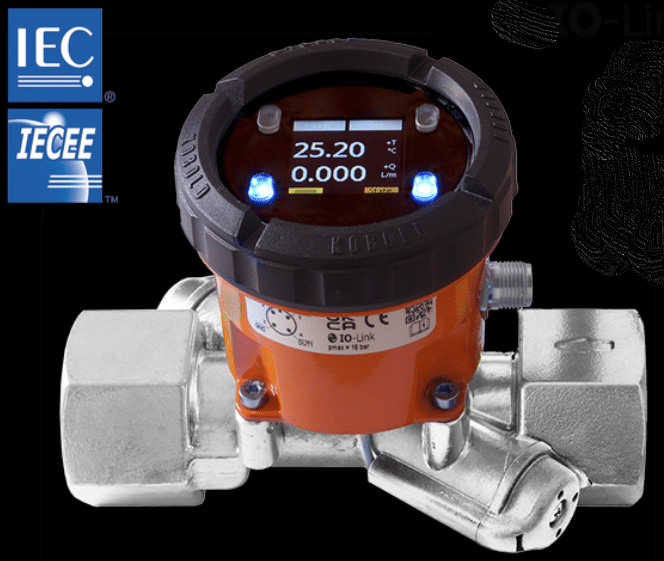
There are two main configurations. Clamp-on ultrasonic meters strap onto the outside of an existing pipe, with the transducers reading through the pipe wall — ideal where shutting down the line to fit a meter isn’t practical. Inline (wetted) ultrasonic meters are installed directly into the pipework, with the transducers in contact with the fluid, typically chosen where a permanent, high-accuracy installation is required from the outset. For additional information see the Kobold DUK data sheet using the following link:
Where Ultrasonic Flow Meters Excel
Because there’s no moving part sitting in the flow stream, an ultrasonic flow meter introduces no pressure drop and has nothing internal to wear out, foul, or clog — a real advantage over turbine or positive displacement designs when the fluid carries particulates or is corrosive. This makes ultrasonic technology a strong fit for large-diameter water mains, wastewater and effluent lines, chemical dosing lines, and any application where retrofitting a meter without a shutdown matters.
The trade-off is that ultrasonic accuracy depends heavily on a good, undisturbed straight run of pipe either side of the meter, and on the fluid being reasonably free of large air bubbles or heavy solids that can scatter the sound signal. For clean, well-behaved flows, that’s rarely an issue.
See Video link below on the Kobold DUK Ultrasonic Flow Meter
BES Flowmeters Ultrasonic & Non-Invasive Options
BES Flowmeters supplies the Kobold clamp-on and inline ultrasonic flow meters alongside the rest of our flow meter range, backed by our position as an authorised Siemens flow meter distributor for electromagnetic flow meters. If ultrasonic isn’t the right fit for a particular application, our team can talk you through alternatives such as positive displacement (Oval Gear ) meters or turbine flow meters, based on your fluid, pipe size, and site conditions.
Frequently Asked Questions
What is an ultrasonic flow meter?
An ultrasonic flow meter measures the flow rate of a liquid or gas by sending high-frequency sound waves through the fluid and calculating flow from the time it takes those waves to travel with and against the flow. Because it doesn’t need to cut into or obstruct the pipe, it’s classed as a non-invasive flow measurement technology.
Are ultrasonic flow meters accurate?
Modern clamp-on and inline ultrasonic flow meters are highly accurate for most industrial applications, typically within 1-2% of reading when correctly installed on a straight run of pipe with the fluid properties properly configured.
Can an ultrasonic flow meter be fitted without cutting the pipe?
Yes. Clamp-on ultrasonic flow meters strap directly onto the outside of an existing pipe, with no cutting, drilling, or process shutdown required. Inline (wetted) ultrasonic meters are also available where a permanent, in-line installation is preferred.