

Where Electromagnetic Flow Meters Fit in Water & Wastewater Treatment
Walk through almost any water or wastewater treatment plant in Australia and you will find electromagnetic flow meters at nearly every stage of the process. From the raw water coming in to the treated effluent going out, they are the meter of choice for operators who need reliable readings from difficult liquids without the maintenance headaches of mechanical meters.
This guide walks through a typical treatment process, stage by stage, showing where electromagnetic meters are used, what each measurement point is for, and what matters when specifying a meter for it. Whether you are upgrading an existing plant, designing a new one or replacing an ageing meter, it will help you ask the right questions before you order.
Why Electromagnetic Flow Meters Suit Treatment Plants
An electromagnetic flow meter, often called a mag meter or magnetic flow meter, uses a magnetic field across the pipe. As a conductive liquid flows through that field, it generates a small voltage that is proportional to its velocity. Electrodes pick up that voltage and the transmitter converts it to a flow rate. For a full technical explanation, see our guide to what an electromagnetic flow meter is and how it works.
That principle gives mag meters several advantages that matter in water and wastewater:
- A clear, full bore. Nothing sits in the flow path, so rags, grit and solids pass straight through without blocking or damaging the meter.
- No moving parts. There is nothing to wear, jam or replace, which keeps maintenance low over a long service life.
- No pressure loss. An unobstructed bore means no extra pumping energy is needed to push flow through the meter.
- Wide measuring range. One meter can read accurately from low night-time flows through to peak wet-weather flows.
- Bidirectional measurement. Mag meters can measure flow in both directions, which is useful on network mains and reversible lines.
The main requirements are that the liquid is conductive and the pipe runs full. Water, wastewater, sludge and most treatment chemicals easily meet the conductivity requirement.
Stage by Stage: Where Mag Meters Are Used – Link below
https://assets.new.siemens.com/siemens/assets/api/uuid:523d075c-539f-4082-b31b-3b76c0030b90/width:1266/quality:high/fmt020-process-animation.webp
Every plant is different, but most follow a similar path from intake to discharge. Here is where electromagnetic meters typically sit, and why.
1. Raw water intake and abstraction
Water drawn from rivers, dams or bores is measured as it enters the plant. This measurement supports licence reporting, sets the dosing rates for everything downstream and tracks how much water the plant is processing. Raw water can carry silt, algae and debris, so a full-bore meter with a durable liner is a sensible choice. Intake meters at remote pump stations often have no mains power, which is where battery-powered meters such as the SITRANS F M MAG 8000 are designed to operate for years without maintenance.
2. Chemical dosing
Coagulants, pH correction and disinfection chemicals are dosed in proportion to the flow being treated. The main flow meter provides the signal that controls the dosing pumps, so its accuracy directly affects both treatment quality and chemical costs. Accurate, stable flow measurement here prevents both under-dosing, which risks treatment performance, and over-dosing, which wastes chemicals.
3. Filtration and backwash
Flow through each filter is monitored to keep loading even across the filter bank. Backwash flows are measured to confirm each filter is cleaned properly without wasting treated water. Backwash lines see high flows for short periods, so a meter with a wide turndown handles both the peaks and the quiet periods between cycles.
4. Treated water and distribution
Treated water leaving the plant is measured for production reporting, reservoir management and network balancing. Out in the distribution network, meters track zone flows and help find leaks by comparing supply against consumption, including minimum night flows. For network and revenue metering, look for meters that comply with recognised water meter standards and can be verified in place.
5. Wastewater inlet works
At a sewage treatment plant, incoming flow is measured after screening. This is one of the toughest measuring points on any site: the flow is variable, contains grit and fibrous material, and spikes sharply in wet weather. Mag meters handle it well because there is nothing in the flow path to catch rags or wear under grit.
6. Aeration, return and waste activated sludge
Activated sludge plants recirculate sludge to keep the biological process in balance. Return activated sludge (RAS) and waste activated sludge (WAS) flows must be measured and controlled accurately, because they directly affect treatment performance. Sludge is abrasive and variable, so liner and electrode choice matters most here.
7. Sludge thickening, digestion and dewatering
Further downstream, thickened and digested sludge is pumped between processes and fed to dewatering equipment. Solids content is higher and flows are lower, so meter sizing is important to keep the velocity high enough to avoid solids building up inside the meter.
8. Effluent discharge and recycled water
Treated effluent is measured before it is discharged or sent for reuse. This measurement is often a licence condition, so it needs to be reliable and verifiable. Recycled water supplied to irrigation, industry or third-pipe schemes is also typically metered for reporting and billing.
Choosing the Right Liner
The liner is the insulating layer inside the meter body that the liquid flows against. It has to resist the liquid chemically, stand up to abrasion and be approved for the application. Common choices include:
| Liner | Typical applications | Notes |
|---|---|---|
| NBR (hard rubber) | Raw water, wastewater, general water | Robust, cost-effective choice for most water and wastewater duties |
| EPDM | Drinking water | Available with approvals for potable water contact |
| PTFE | Chemicals, higher temperatures | Excellent chemical resistance for dosing and aggressive liquids |
For drinking water, always confirm the liner carries the approvals your authority requires. For sludge and grit, prioritise abrasion resistance.
Choosing the Right Electrodes
Electrodes sit flush with the liner and pick up the signal from the liquid. Stainless steel electrodes suit most water and wastewater duties. More resistant materials, such as Hastelloy, are used where the liquid is corrosive or where chemical dosing points are close by. Some sensors also include built-in grounding electrodes, which can remove the need for separate grounding rings on many installations and simplify fitting.
Sizing: Don’t Just Match the Pipe
It is tempting to order a meter the same size as the pipe. That is not always the best choice. Mag meters read most accurately within a sensible velocity range, and in sludge lines, very low velocities allow solids to settle inside the meter. If your pipe is oversized for the actual flow, a meter one or two sizes smaller, with reducers either side, can improve accuracy and keep the meter self-cleaning. For a step-by-step approach, see our magnetic flow meter buying guide.
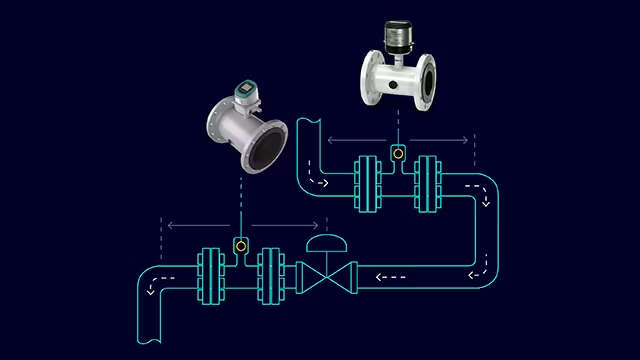
Installation Considerations on Treatment Sites
- Keep the pipe full. On gravity lines and outfalls, install the meter in a low section or on a rising line so it always runs full. Empty pipe detection, available on many transmitters, flags when the pipe is not full.
- Allow straight pipe. Pumps, valves and bends distort the flow profile. Some modern sensors are designed to need little or no straight pipe, which helps in cramped pump stations.
- Get grounding right. Plastic and lined pipe does not provide a natural earth path, so follow the manufacturer’s grounding requirements closely.
- Consider submersion and burial. Pits and chambers flood. Choose a sensor with the right protection rating where flooding or burial is possible.
- Mount the transmitter where it can be read. Remote mounting keeps the electronics accessible when the sensor is in a pit or awkward location.
Verification and Maintenance
One of the main reasons treatment plants favour electromagnetic meters is how little ongoing maintenance they need. With no moving parts, there is nothing to wear out. A few routine checks still help keep readings trustworthy:
- Verify in place. Many modern meters support in-situ verification, which checks the sensor and transmitter electronics without removing the meter from the line. This is especially useful for licence and billing meters, where regular verification may be required.
- Check for coating. In some wastewater and sludge applications, grease or deposits can build up on the electrodes over time. Transmitter diagnostics can often flag this before it affects the reading.
- Watch the diagnostics. Empty pipe, coil and electrode alarms give early warning of installation or process problems. Connecting these alarms to your control system means they are seen rather than missed.
- Compare meters. Where two meters measure the same flow, such as an inlet meter and the sum of downstream meters, comparing the readings over time is a simple way to spot drift.
How the Siemens SITRANS F M Range Fits These Applications
BES Flowmeters supplies the Siemens SITRANS F M electromagnetic flowmeter range, which covers most treatment plant and network duties:
- SITRANS FMS500 flow sensor is built for water and wastewater, with sizes from DN15 to DN1200, NBR and EPDM liner options, integrated grounding electrodes and a fully welded design that supports direct burial and constant flooding. It suits abstraction, treatment, distribution, irrigation and leak detection.
- SITRANS FMT020 transmitter is the current-generation transmitter that succeeds the MAG 5000 and 6000. It offers a large graphical display, compact or wall mounting, SD card data logging and plug-in communication modules including HART, Modbus RS485, PROFINET and EtherNet/IP, so it connects to most plant control systems.
- SITRANS F M MAG 8000 is a battery-powered meter for remote network sites, irrigation and revenue metering, with an IP68 rating and optional wireless communication for remote reading.
For an overview of the full range, see our Siemens flow meters range guide, or browse all electromagnetic flow meters.
A Quick Specification Checklist
Before requesting a quote, gather the following for each measuring point:
- Liquid type and approximate solids content
- Minimum, normal and maximum flow rates
- Pipe size, material and connection type
- Operating pressure and temperature
- Whether the site is prone to flooding or needs a buried meter
- Power available on site (mains, solar or none)
- Required outputs and communication with your control system
- Any approvals needed, such as drinking water or billing
Talk to a Specialist About Your Plant
BES Flowmeters has been helping Australian customers select, size and install the right flow meter since 1986, and can help you match the right sensor, liner and transmitter to each stage of your treatment process.
Not sure which meter suits your application? Call BES Flowmeters on (03) 5956 8685 or email sales@besflowmeters.com.au and our team will help you match the right meter to your pipe, fluid and budget.
Frequently Asked Questions
Why are electromagnetic flow meters used so widely in water and wastewater treatment?
Electromagnetic flow meters have no moving parts and nothing protruding into the flow, so they do not block, wear or cause pressure loss. They measure any conductive liquid, including raw water, sludge and treated effluent, and they hold their accuracy across a wide range of flow rates, which makes them well suited to almost every stage of a treatment plant.
Can an electromagnetic flow meter measure sludge?
Yes. Because the meter has a full, unobstructed bore, it handles sludge and solids-laden flows well. The key is choosing a hard-wearing liner, suitable electrodes and a meter size that keeps velocity high enough to prevent solids settling in the meter.
What is the minimum conductivity an electromagnetic flow meter needs?
Most electromagnetic flow meters need a conductivity of at least around 5 µS/cm. Raw water, wastewater, sludge and most treated waters are comfortably above this. Very pure water, such as reverse osmosis permeate or demineralised water, may be too low and needs a different technology.
Can electromagnetic flow meters be installed underground?
Some can. Meters built for water networks, such as the Siemens SITRANS FMS500 sensor with IP68 protection, are designed for direct burial and constant flooding. Always confirm the meter’s protection rating and the manufacturer’s installation requirements before burying or submerging it.
Does an electromagnetic flow meter need a full pipe?
Yes. Standard electromagnetic flow meters need the pipe to be completely full at the measuring point. On gravity lines and outfalls, the meter is often installed in a low section of pipe or on a rising section so it always runs full.